
Estimated read: 7 minutes
“Saying ‘I’m not good at this’ before starting isn’t humility; it is the shield we raise to protect ourselves from finding out what we are truly made of.”
ENGLISH VERSION
SPANISH VERSION
A few days ago, during a design class in New York, I witnessed an all-too-familiar dynamic unfold across the room.
We were starting a new module filled with unfamiliar creative and technical challenges. Before anyone had drawn a single stroke or opened a blank canvas, an anxious whisper began traveling from desk to desk: “I’m really not good at this,” “It’s been years since I practiced,” “This just isn’t my thing.”
Hearing those words instantly brought back memories of my physical workouts and athletic training with friends. Whenever we faced a demanding exercise, a heavy routine, or an unfamiliar movement, that exact same defense mechanism surfaced: excuses voiced long before the first rep was even attempted.
I sat there examining that invisible barrier. Why do we sabotage our momentum before taking a single step? Is it an ingrained cultural defense? A calculated way of telling the world, “Don’t expect much,” to cushion the blow of potential failure? Or is it simply the most convenient exit ramp to escape discomfort and walk away unchallenged?
The Cage of the Familiar
Hiding behind the label of “I can’t” buys immediate, artificial relief. It keeps us anchored within familiar, safe borders. Yet in that very transaction, we forfeit our right to discover our own reach.
What happens when we pull back the veil of fear and step beyond the comfortable? Suddenly, what felt impossible shifts into viable territory. We allow curiosity to take the wheel, unlocking latent capacities we had never dared to test.
I often think of the young fledgling perched at the edge of the nest: it cannot know it has the strength to fly until its mother, out of profound trust and love, launches it into the open air to discover its wings.
In adult life, that gentle push rarely arrives. We live inside a culture designed to avoid friction. If you do not choose to step forward out of your own inner conviction, nobody is going to force you. This is not about hollow motivational slogans; it is about dismantling the self-imposed myth of your own incompetence. It is about stepping onto the proving ground with an open mind, ready to hear new rhythms and envision new horizons.
From the Defensive Shield to the Craftsman’s Leap
Breaking this mental loop does not require artificial hype. It demands a deliberate rewiring of how we encounter the unknown:
- 1. The habitual defensive shield: It starts with the automated reflex (“I’m no good at this”), triggered by fear of outside judgment and visible mistakes. The immediate reaction is to dodge the challenge or seek a quick shortcut, remaining comfortably stagnant.
- 2. The conscious shift: The moment you silence that preemptive excuse. You recognize that early awkwardness is not a personal defect, but the mandatory threshold to any real competence.
- 3. The craftsman’s leap: Putting your hands on the raw material, embracing the friction of the process, and allowing yourself to fail as many times as necessary to master the craft.
- 4. The Return of the Intangible: The true breakthrough. It isn’t just about crossing a finish line, but claiming an inner certainty that no one can strip away: realizing your limitations were entirely self-imposed.
The Siren Call of the Shortcut
Today, this psychological crossroads is sharper than ever. We are surrounded by instantaneous digital systems. If we feel inadequate or technically challenged, an artificial intelligence engine can draft an article, compose a background track, or render an illustration in seconds—often looking cleaner than what we thought we could make ourselves.
It is easy to surrender to that convenience and lose our way. But delivering an output is fundamentally different from experiencing a breakthrough.
In my book Booster: The Future Is Human, I explored a core pillar: the Return of the Intangible. The true worth of what we create does not lie solely in the final file or the speed of execution. Real value lies in the internal transformation of the craftsman who endured the friction of mastering the work. It is forged in judgment, in patience, and in uncovering an inner resilience that we spend lifetimes seeking externally—in job titles, corporate approval, or outside validation.
Modern tools are extraordinary precision instruments. But their purpose is not to steal your voice or bypass your growth; their purpose is to amplify a craftsman who possesses the courage to lead his own craft.
The Breakthrough of Trying
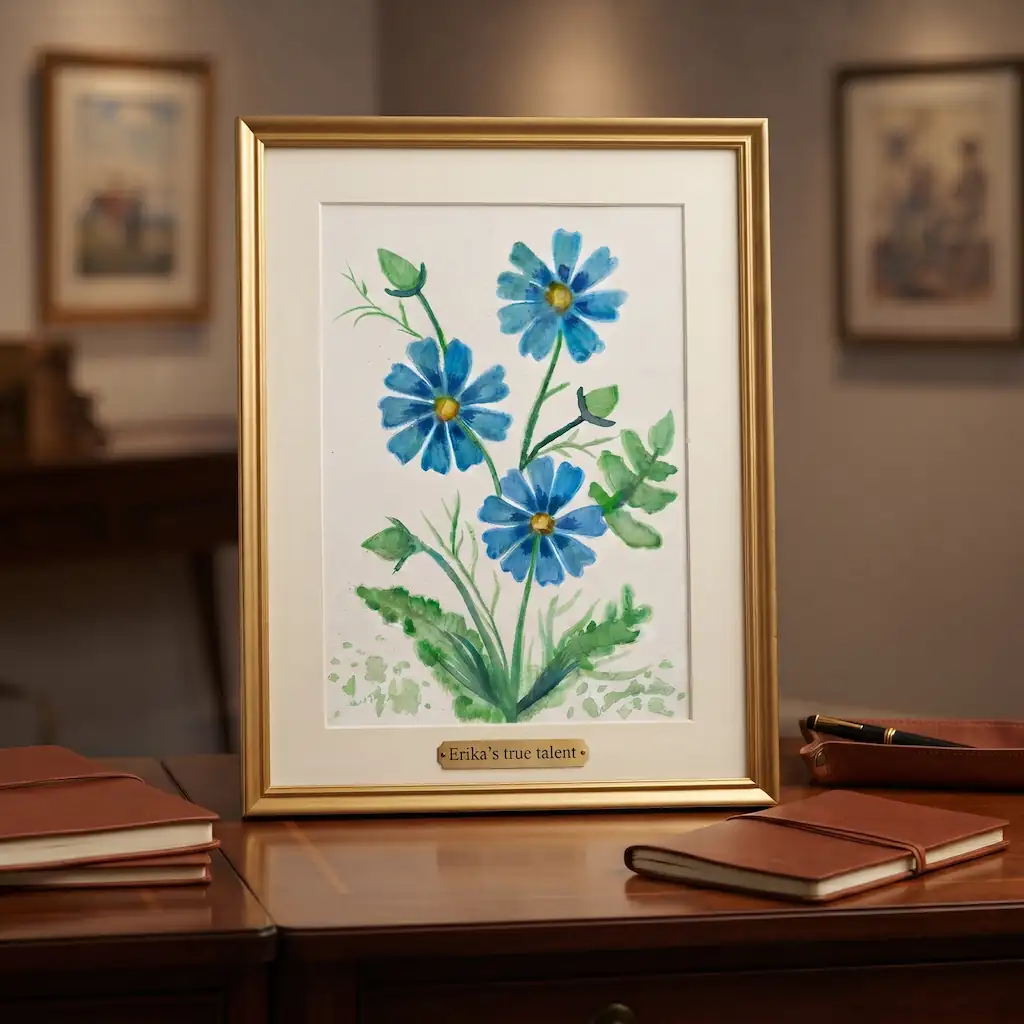
During that same studio class in New York, a quiet breakthrough occurred. A classmate who had repeatedly insisted that she couldn’t sketch and that her artistic hand was useless finally took a deep breath, dropped her defenses, and began to draw.
As lines took shape across her paper, her entire demeanor shifted. The sheer realization of what her hands could produce swept away years of accumulated self-doubt in an instant.
To a casual passerby, it might have looked like a modest exercise; to her, it was a structural paradigm shift. It proved that the limitations we defend with such fierce conviction are rarely physical reality—they are merely comfortable excuses built to shield us from the thrill of learning.
The Call: Become Part of The Lab
I invite you to break that cycle today. Stop announcing your supposed limitations to the world.
Leverage the powerful tools at your disposal. Harness them to accelerate your process and build your own Booster, but never forget that you are the architect. What truly endures is the craftsman who sits down at the workbench, faces the blank page, and brings into existence what he once feared to attempt.
This is precisely why The Lab exists within harvester.rocks. Not as a sterile gallery of polished outcomes, but as a live workshop where we drop corporate facades, experiment without fear of error, and build from who we authentically are.
I invite you to visit The Lab, explore our ideas, and become an active voice in this movement. The workshop doors are wide open for those ready to move past passive excuses into deliberate creation.
Your Voice in The Workshop
- What automatic defense do you catch yourself uttering whenever a new, unfamiliar challenge appears?
- What skill, craft, or project have you kept parked under the guise of “I’m just not good at it”?
Drop your thoughts in the comments below. Inside The Lab, we read every reflection and build forward together.



Hello,
This message really gave me a lot to think about, because it’s absolutely true that we create our own obstacles—often by staying in our comfort zone or hiding behind a shield that protects us from defeat or failure. I love that this message reached me exactly when I needed it; it’s like a mother bird nudging her chick out of the nest. That’s exactly what just happened to me, and now I’m going to do what needs to be done and confront the mental blocks I’ve been holding onto. As my mother would say, “Grab the bull by the horns.” Thank you for this wonderful message.
Thank you so much for sharing this—reading your reflection truly made my day.
That shield of ‘I can’t’ feels protective at first, but it quickly becomes our own cage. Hearing that the metaphor of the bird taking that leap resonated with you right at this moment is exactly why I write these essays and why The Lab exists.
Our mother couldn’t be more right: grabbing the bull by the horns is where our real craftsman’s trace begins. Trust the process, embrace the awkward first steps, and don’t look back. You’ve got everything it takes to build what’s ahead.
Welcome to the workshop, and thank you for being an active voice here!